Stimulus Response
Psychophysical rating of linearly increasing pressure until the pain tolerance threshold or limit is reached. This procedure can be used to determine pressure pain detection and tolerance thresholds.
Cuff pressure algometry provides pressure-pain stimuli by inflating tourniquet cuffs under computer control. This enables experimental procedures that are impossible with conventional handheld pressure algometry. A second advantage of tourniquet cuffs is that they induce pain throughout the extremity. This is more clinically relevant than the cutaneous and superficial pain induced by handheld pressure algometry.
Cuff pressure algometry does not rely on operator strength and is not controlled by the operator. This allows precise pressure application and the determination of supramaximal thresholds, such as pain tolerance thresholds. The precise pressure control also provides high temporal resolution. This enables experimental procedures such as temporal summation of pressure stimuli.
All cuff pressure algometry procedures use pressure stimuli rated by the subject. These procedures can be divided into two main categories. The first category of procedures (scaling procedures), pressure stimuli are rated on a visual analogue scale. In the second category of procedures (threshold procedures), pressure stimuli are rated by indicating perception thresholds, most commonly the pain detection and tolerance thresholds.
A second distinction is whether the pressure stimuli are unconditioned or conditioned by a second painful stimulus. This conditioning stimulus can be induced by a second tourniquet cuff under computer control or by an external stimulus, such as submersion of a hand or foot in a cold water bath.
Currently, the following cuff pressure algometry procedures are available:
| Name | Type | Description |
|---|---|---|
| Stimulus Response | Scaling | Stimulus-response procedures determine the psychophysical rating (VAS Rating) to a linearly increasing pressure stimulus. |
| Conditioned Pain Modulation | Scaling | With the conditioned pain modulation procedure, one cuff applies static pressure while the other determines a stimulus-response curve. The stimulus-response curve determines the psychophysical rating (VAS Rating) to a linearly increasing pressure stimulus. |
| Temporal Summation | Scaling | The temporal summation procedure applies a series of rectangular pressure stimuli to one or both cuffs. The participant is asked to rate the pain sensation of these stimuli on the VAS meter as soon as possible after the cessation of a pressure stimulus. The VAS rating for a stimulus is recorded just before the next stimulus is given or would have been given if it had not been the last stimulus in the series. |
| Arbitrary Temporal Summation | Scaling | The arbitrary temporal summation procedure applies a series of rectangular pressure stimuli to one or both cuffs. The participant is asked to rate the pain sensation of these stimuli on the VAS meter as soon as possible after the cessation of a pressure stimulus. The VAS rating for a stimulus is recorded just before the next stimulus is given or would have been given if it had not been the last stimulus in the series. The arbitrary temporal summation procedure makes it possible to specify each stimulus in the series individually, and thus, each stimulus can have a different intensity and duration. |
| Static Temporal Summation | Scaling | The static temporal summation applies a constant pressure for a specified duration instead of a series of stimuli to determine the temporal summation of pressure stimulation. During this pressure stimulation and for a period after the procedure, the participant’s VAS score will be recorded as the result of the procedure. |
| Stimulus Rating | Threshold | The stimulus rating procedure provides a way to determine the Pain Detection Threshold (PDT), the Pain Tolerance Threshold (PTT), or both with an attached button. The procedure is executed in the same way as the stimulus-response procedure and is defined by the same parameters, with the exception that it does not have a stop-mode parameter but instead has a measurement parameter. |
| Conditioned Pain Modulation Rating | Threshold | The conditioned pain modulation rating procedure is analogous to the conditioned pain modulation procedure that uses a button instead of the VAS to determine pain detection threshold (PDT), pain tolerance threshold (PTT), or both. The same parameters define the procedure as the conditioned pain modulation procedure, with the addition of the measurement parameter that defines how the button is used to determine PDT, PTT, or both. |
The simplest experimental setup for cuff pressure algometry consists of the equipment shown in Figure X. The LabBench CPAR+ device is combined with either a LabBench SCALE (scaling algometry procedures) or a LabBench BUTTON (threshold algometry procedures). The LabBench CPAR+ device is controlled by LabBench running on a laboratory computer.
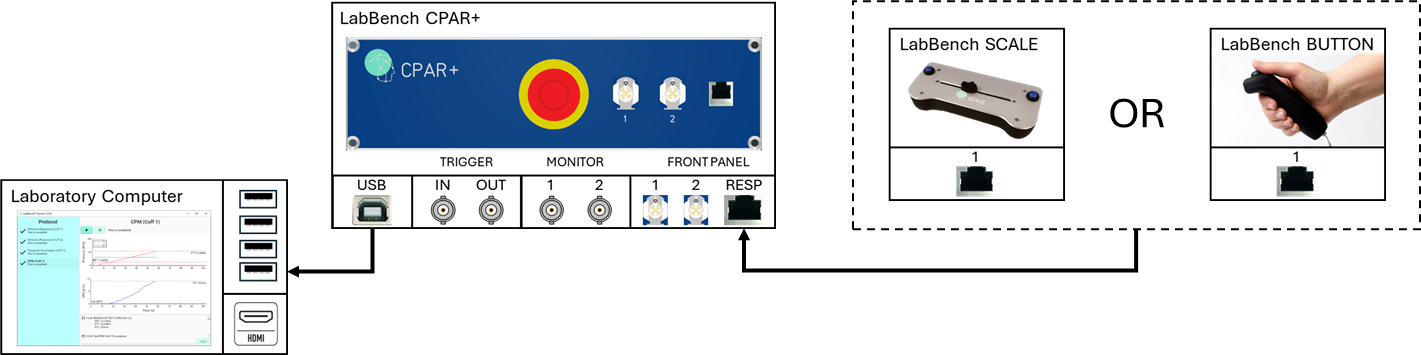
Figure 1
The <experimental-setup> element for this experimental setup is shown below:
<experimental-setup name="LabBench CPAR+">
   <devices>
      <cpar-plus id="dev"/>
   </devices>
   <device-mapping>
      <device-assignment instrument-name="PressureAlgometer" device-id="dev" />
   </device-mapping>
</experimental-setup>
The experimental setup for cuff pressure algometry can also be extended with an external display. An external display can show a calibrated VAS scale during scaling procedures, controlled by the participant with the LabBench SCALE device. The external display can also be used to provide participants with instructions throughout the experimental sessions.
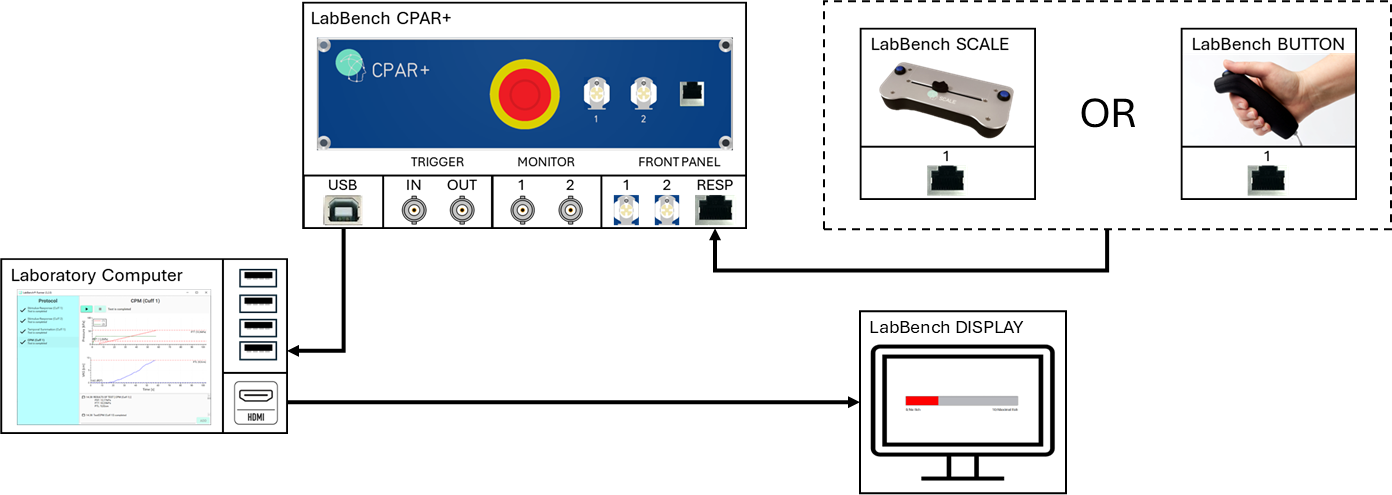
Figure 2
The <experimental-setup> element for this experimental setup is shown below:
<experimental-setup name="LabBench CPAR+ (Scale on secondary monitor)">
   <devices>
      <cpar-plus id="dev"/>

      <display id="display" normative-distance="40">
         <typography active-colour="rgb(255,0,0)"
            background-colour="rgb(255,255,255)"
            inactive-colour="rgb(16,16,16)" />

         <configurations>
            <visual-analogue-scale
               id="vas"
               experimental-setup-id="vas"
               length="10"
               controller-device="dev">
               <anchors>
                  <modality text="" />
                  <top-anchor text="10/Worst imaginable itch" />
                  <bottom-anchor text="0/No itch" />
               </anchors>
            </visual-analogue-scale>
         </configurations>
      </display>
   </devices>
   <device-mapping>
      <device-assignment instrument-name="PressureAlgometer" device-id="dev" />
   </device-mapping>
</experimental-setup>
An implementation of these experimental setup can be seen in the Introduction to Cuff Pressure Algometry.
Spatial summation can be studied by placing two cuffs adjacent to each other and inflating the cuffs in parallel. Inflating the cuffs in parallel can be achieved by setting the second-cuff attribute to true. The effect of setting the second-cuff attribute to true is shown in Figure 3.
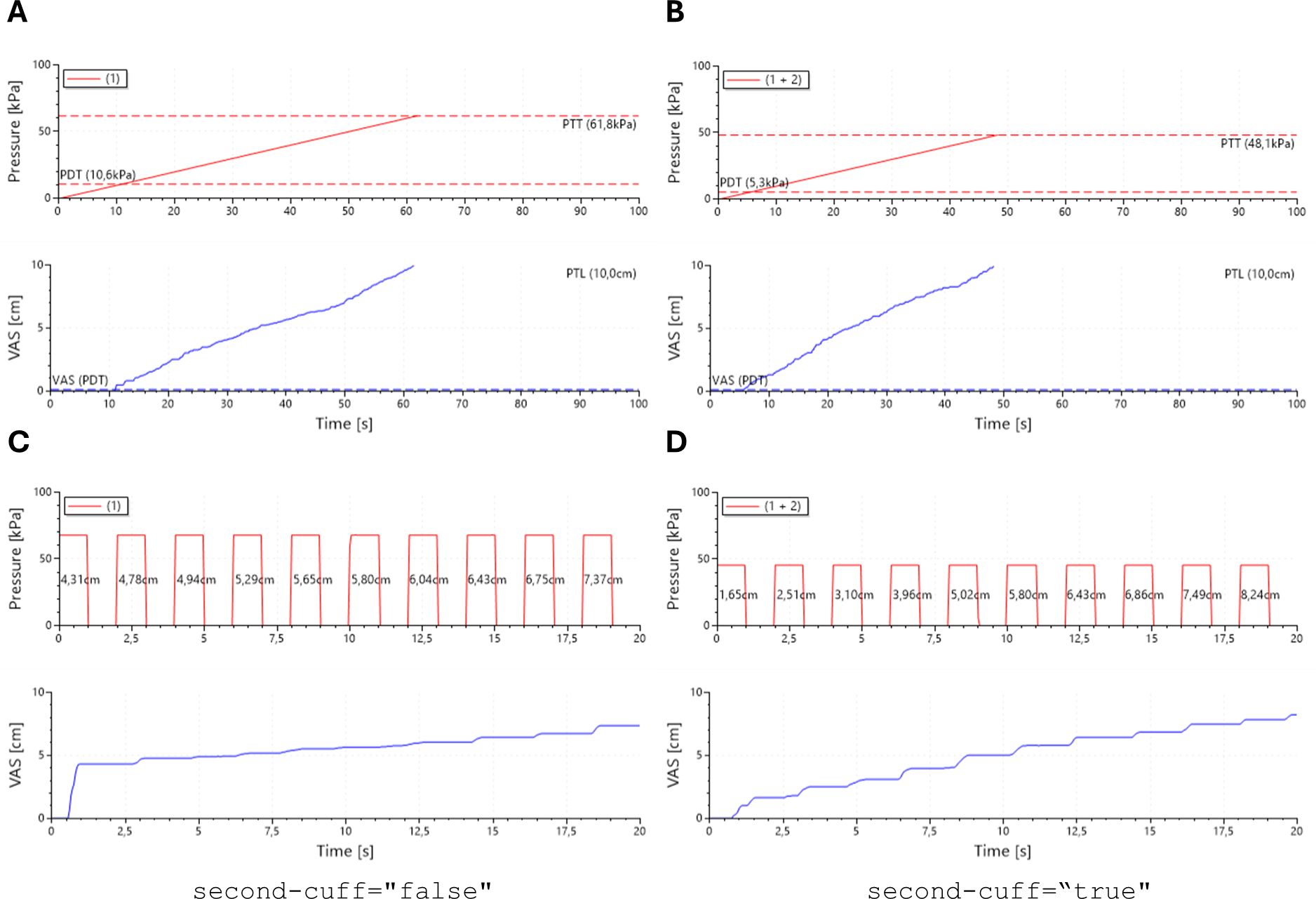
Figure 3: Illustration of how the second-cuff attribute can be used for spatial summation tests.
Conditioned pain modulation is a psychophysical mechanism in which a conditioning stimulus reduces the pain evoked by a second stimulus. It’s often summarised as “pain inhibits pain.” In LabBench procedures, the conditioning stimulus can be directly controlled by a LabBench device or provided externally. Stimulus Response and Stimulus Rating procedures use external conditioning stimuli, in which the subject experiences an external stimulus, such as cold water. In contrast, Conditioned Pain Modulation and Conditioned Pain Modulation Rating procedures use computer-controlled stimuli managed directly by the LabBench device. The outcome measure for these procedures is the change in psychophysical ratings and thresholds (PDT and PTT) induced by the conditioning stimulus relative to the unconditioned ratings and thresholds.
When the conditioning stimulus is external, the procedure is to present it to the participant while simultaneously starting the test. A common procedure is to apply the conditioning stimulus before the start of the stimulation pressure. For this purpose, all of these procedures have a conditioning-time attribute that delays the start of stimulation pressure. For computer-controlled conditioning stimuli, there is also a delta-conditional-pressure attribute that gradually increases the conditioning stimulus rather than applying it instantaneously. This is to avoid startling the participant by applying a sudden, highly painful stimulus.
The effect of these two attributes is illustrated in Figure 4.
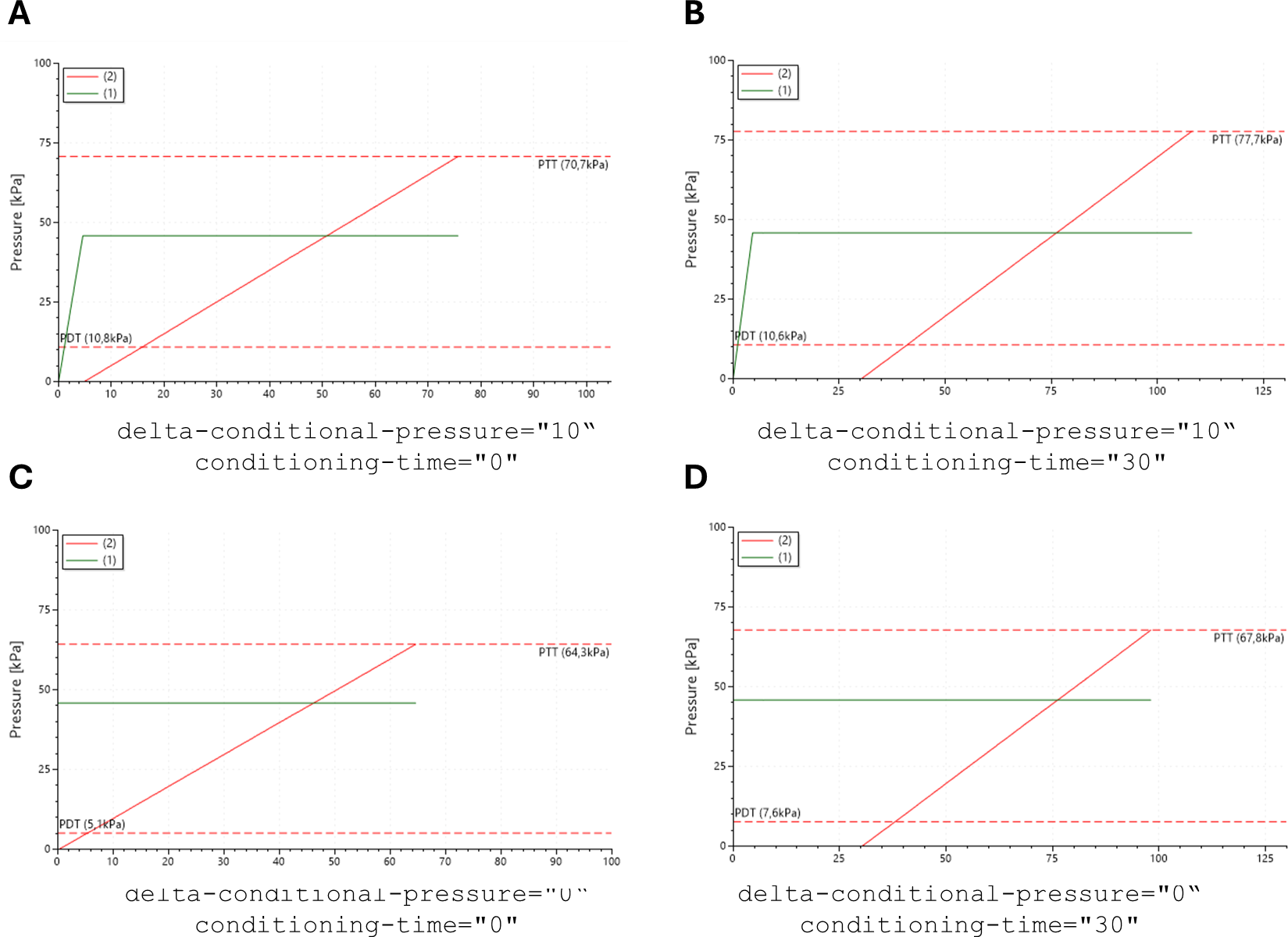
Figure 4: Illustration of how the conditioning-time and delta-conditional-pressure controls the application of conditioning stimuli.
For scaling procedures, participants rate the pressure stimuli on a visual analogue scale. To perform this rating, the scale’s anchor points need to be defined for participants. For cuff pressure algometry, visual analogue scales have been used with either two or three anchor points, and the definition is determined by the stop-mode attribute in the scaling procedures.
The stop-mode attribute determines whether the VAS scale has two (2) or three anchor points (3):
stop-on-maximal-rating, the VAS scale has two anchor points (pain detection threshold (PDT), pain tolerance threshold (PTT)).stop-when-button-pressed, the VAS scale has three anchor points (pain detection threshold (PDT), pain tolerance limit (PTL), pain tolerance threshold (PTT)).The effect of the stop-mode on the determination of the PDT, PTT, and PTL thresholds is shown in Figure 5.
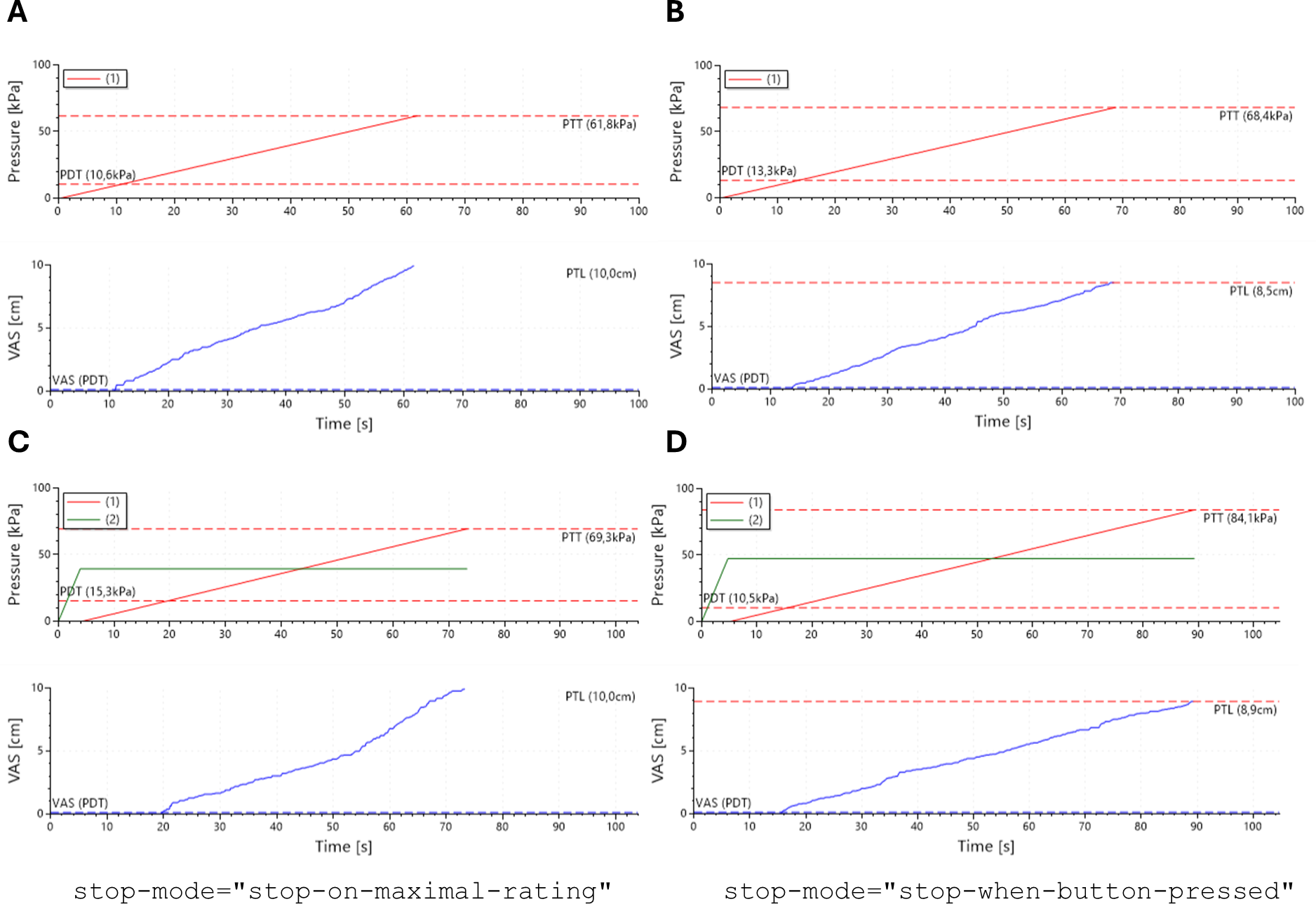
Figure 5: Illustration of how the stop-mode attribute controls whether two or three anchor points are used for the visual analog scale.
For threshold procedures, the outcome measures are pain detection and pain tolerance thresholds, indicated by the participant pressing a button. Which thresholds are determined is controlled by the measurement attribute:
The effect of this attribute is illustrated in Figure 6.
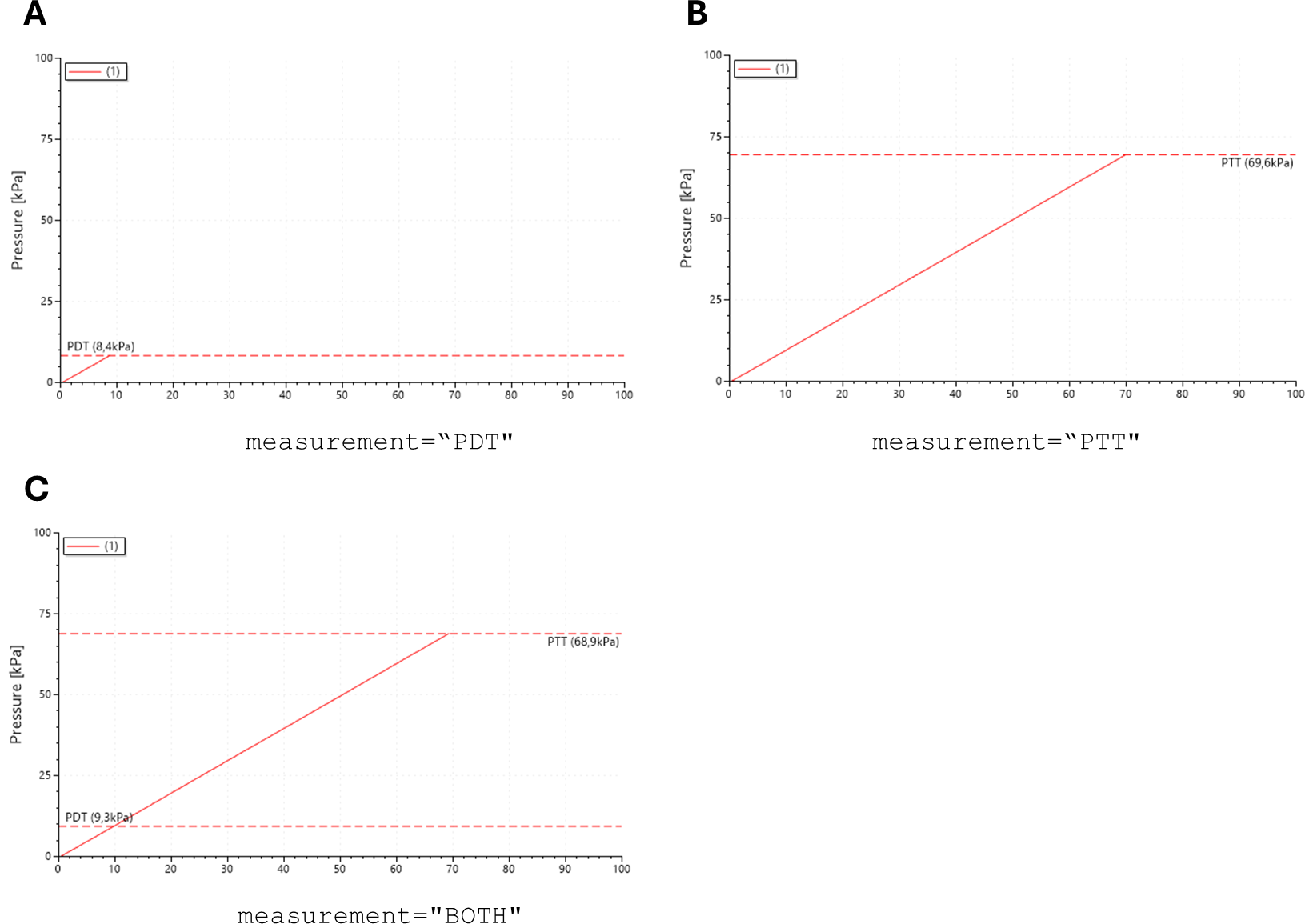
Figure 6: Illustration of how the measurement attribute controls how and which thresholds are determined.
Psychophysical rating of linearly increasing pressure until the pain tolerance threshold or limit is reached. This procedure can be used to determine pressure pain detection and tolerance thresholds.
Psychophysical rating of pressure stimuli given in quick succession that evokes temporal summation.
Psychophysical rating of pressure stimuli that evoke temporal summation. These stimuli are given in quick succession, where the timing and intensity of each stimulus can be specified.
Psychophysical rating of a rectangular static pressure stimulus.
Psychophysical rating of linearly increasing pressure that is being conditioned by a second continuous pressure stimulus until the pain tolerance threshold or limit is reached. This test can be used to determine pressure pain detection and tolerance thresholds.
Determination of pain detection and/or tolerance thresholds to linearly increasing pressure. Participants indicate the thresholds through button presses.
Determination of pain detection and/or tolerance thresholds to linearly increasing pressure conditioned by a second static pressure. Participants indicate the thresholds through button presses.